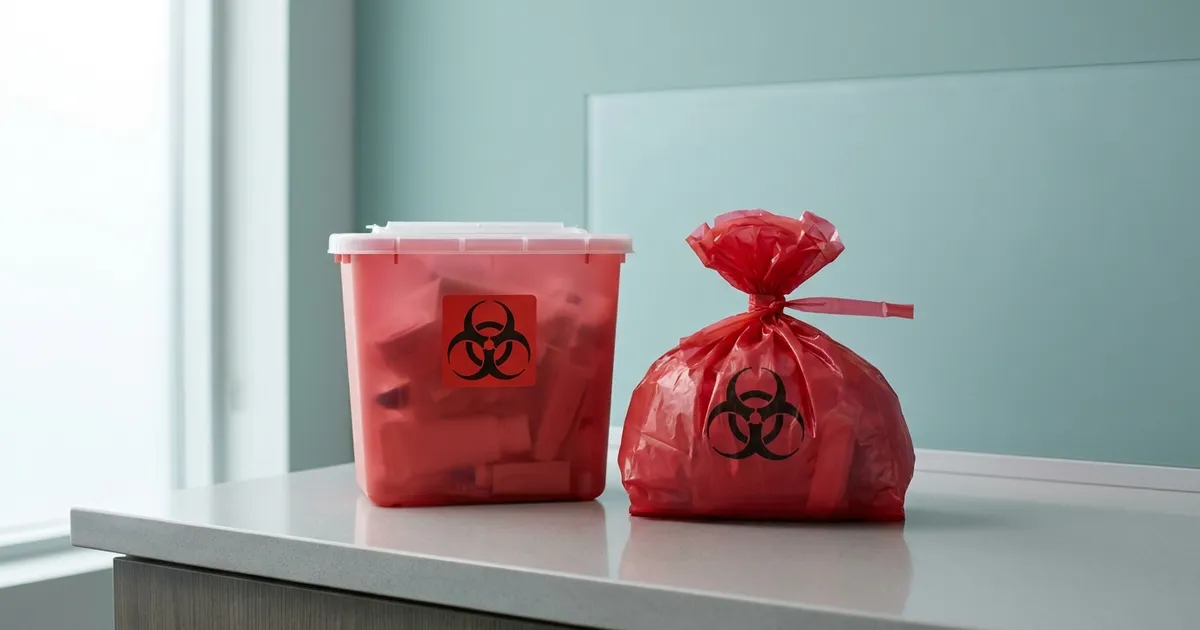
Medical waste disposal in San Antonio is governed by the TCEQ under 30 TAC Chapter 326. Clinics and studios generating over 50 pounds of untreated waste a month need a TCEQ-registered transporter or their own registration; smaller generators may self-transport to an authorized facility; and households can put sharps in regular trash inside a sealed, hard-sided container.
“Medical waste disposal” means very different things depending on who is asking. A dental practice needs a route service that swaps sharps containers every month. A tattoo artist needs to know whether a mail-back box is legal. A diabetic managing injections at home needs to know what to do with a full container of needles. And a family or property owner dealing with blood or bodily fluids after a death or accident needs something else entirely, a remediation crew, not a waste hauler.
This guide covers all four situations for San Antonio and Bexar County: what Texas actually regulates, the disposal options for each type of generator, what the services cost, and where scene-related biohazard waste fits in. One honest note up front: we are a biohazard cleanup company, not a route-based medical waste hauler. If you need weekly sharps pickups for a clinic, this guide will point you to the right kind of provider. If you have a contaminated scene that needs decontaminating and the waste legally removed, that is the work we do, 24/7, at (210) 864-1250.
Who Needs Medical Waste Disposal in San Antonio
If any of these describe you, medical waste rules apply to at least part of your trash:
- Medical, dental, and veterinary practices. Sharps, blood-soaked materials, cultures, and pathological waste from patient care are regulated medical waste and need a compliant disposal arrangement, usually a scheduled pickup service.
- Tattoo and piercing studios. Texas DSHS requires studios to be licensed and to place used needles in approved sharps containers, which then have to be disposed of under TCEQ waste rules, not in the dumpster.
- Funeral homes, dialysis centers, labs, and long-term care facilities. Anywhere bodily fluids or contaminated disposables are generated as part of operations.
- People who inject medication at home. Insulin, hormone therapy, fertility treatment, allergy injections. Texas treats these sharps as household waste, with specific packaging rules covered below.
- Home health situations. Here is a wrinkle most people miss: if a home health agency’s nurse administers the injection in your home, those sharps legally become medical waste and the agency is supposed to take them back and dispose of them through a medical waste system. If you self-inject, they are household waste.
- Property owners and families after a biohazard event. Blood, bodily fluids, and contaminated materials left behind after a death, injury, or crime are regulated waste too, but the answer is a remediation company rather than a waste contract. More on that below.
What Counts as Regulated Medical Waste in Texas
The Texas Commission on Environmental Quality (TCEQ) regulates medical waste under Title 30, Texas Administrative Code, Chapter 326. In plain terms, regulated medical waste includes:
- Sharps — needles, syringes, lancets, scalpel blades, and tattoo needles;
- Blood and bodily fluids and items saturated with them, such as dressings, gloves, and wipes;
- Microbiological waste — cultures and stocks;
- Pathological waste — tissues and anatomical material;
- Animal waste from veterinary care with the same characteristics.
Everyday clinic trash, paper, packaging, unsoiled gloves, is ordinary municipal waste. The regulated stream is the contaminated fraction, and the rules that follow are about how that fraction is packaged, who may transport it, and where it may be treated and disposed of.
The TCEQ Rules That Decide Your Options
One number does most of the work in Texas medical waste regulation: 50 pounds per month.
- 50 pounds or less of untreated medical waste per month makes you a small quantity generator. Under 30 TAC 326.31(b) you are exempt from registration and may self-transport your own waste to an authorized collection station, transfer station, or processing facility. This covers most tattoo studios, small aesthetic practices, and single-chair dental offices.
- More than 50 pounds per month means you either hire a registered transporter or, to haul your own waste, obtain a registration by rule under 30 TAC 326.53. Either way the waste must move under proper packaging and documentation.
- Anyone hauling another generator’s untreated medical waste — every commercial pickup service — must be registered with the TCEQ as a medical waste transporter. This is the box to tick before signing any contract: a legitimate provider can show its TCEQ registration and issues manifests documenting where your waste went.
Household Sharps Disposal in San Antonio and Bexar County
If you inject medication at home, Texas makes this easier than most people expect. Under TCEQ guidance, household sharps may go in your regular trash if packaged correctly:
- Use a hard-sided plastic or metal container with a tightly secured lid. An empty laundry detergent or bleach bottle works well; a purpose-made sharps container is better.
- Seal it and label it so nobody mistakes what is inside, then place it in your garbage cart, never loose needles in a trash bag.
- Never use glass or thin, clear plastic such as water or soda bottles; they puncture and shatter.
- Never put sharps in the recycling bin, sealed container or not. Recycling is hand-sorted, and needle-stick injuries to sorting staff are exactly what these rules exist to prevent.
Two local realities worth knowing. First, the City of San Antonio’s Household Hazardous Waste Drop-Off Center at 7030 Culebra Rd does not accept sharps or medications; it handles paint, chemicals, batteries, and e-waste, and medicine is explicitly on its not-accepted list. The sealed-container trash method is the city-sanctioned route for home sharps. Second, if you would rather not use the trash at all, USPS-authorized mail-back programs ship your full container to a treatment facility; SafeNeedleDisposal.org maintains a Texas directory of mail-back options and drop-off points. For unwanted medications, pharmacy take-back kiosks (many H-E-B, CVS, and Walgreens locations) and DEA National Drug Take Back Day events are the correct route.
What Medical Waste Disposal Costs
Costs scale with volume and pickup frequency far more than with anything else. Typical figures for the San Antonio market:
| Situation | Typical cost |
|---|---|
| Household sharps (sealed container in trash) | Free |
| Sharps mail-back kit (container + return shipping + treatment) | $40–$100 |
| Small clinic or studio, scheduled route pickup | $50–$300/month |
| Per-pound treatment (autoclave) | $0.50–$0.80/lb |
| Sharps container supply/exchange | $20–$50 each |
| Biohazard scene cleanup incl. waste removal (one-time) | $1,000–$15,000+ |
Most small practices land in the $50–$200 per month range on a monthly pickup. Two ways providers quietly grow that number: pickup frequency (weekly service costs several times what monthly does, so right-size it to what you actually generate) and add-on fees. National haulers commonly layer on fuel surcharges of 12–18%, environmental recovery fees of 5–15%, stop charges of $15–$50, and manifest fees of $10–$25. When comparing quotes, ask for the all-in monthly figure with every surcharge included, and check whether an independent Texas provider or a mail-back program beats the national route service at your volume. For a breakdown of the one-time scene figure in the last row, see our biohazard cleanup cost guide.
Biohazard Scene Waste Is a Different Job
Everything above describes a predictable waste stream: you know roughly what you generate, it is already packaged, and a truck collects it on schedule. Waste from a biohazard scene, after an unattended death, a suicide, a serious injury, or a violent crime, breaks every one of those assumptions.
The waste is not pre-packaged; it is soaked into carpet, padding, subfloor, and drywall, and someone trained under OSHA’s bloodborne pathogen standard has to extract it safely. The volume is unknowable until the scene is assessed; a single room can produce hundreds of pounds of regulated waste. And disposal is only half the problem: the property itself has to be decontaminated to a verifiable standard before anyone can live or work there again.
That is why no route hauler will touch a scene, and why this is the half of the medical waste world we work in. As part of every biohazard cleanup in San Antonio, our technicians remove all biological material and affected porous materials, disinfect with EPA-registered products, and package everything that leaves the property as regulated medical waste, transported by a TCEQ-registered carrier, with manifests and written clearance documentation you can hand to your insurer. The same process applies whether it is a contained blood spill cleanup or a full scene remediation; our guide to unattended death cleanup services walks through that larger scope step by step.
To be equally clear about what we do not do: we do not run weekly sharps routes or hold clinical waste contracts. If that is what you need, use the TCEQ transporter registry and the questions in this guide to choose a hauler. If your situation involves blood or bodily fluids in a property, on any scale, call us and we will tell you honestly what it needs.
Frequently Asked Questions
Can I put needles in the trash in San Antonio?
Yes, if they were used at home and packaged correctly. Texas allows household sharps in regular trash when sealed inside a hard-sided plastic or metal container with a tightly secured lid, such as an empty detergent bottle. Never throw loose needles in the garbage, never use glass or thin clear-plastic bottles, and never put the container in the recycling bin.
Does San Antonio’s Household Hazardous Waste center accept sharps or medications?
No. The drop-off center at 7030 Culebra Rd takes paint, chemicals, batteries, and e-waste, but medicine is on its not-accepted list and sharps are not accepted either. Use the sealed-container trash method or a mail-back program for sharps, and a pharmacy take-back kiosk or DEA Take Back Day event for medications.
Do tattoo studios in Texas need a medical waste service?
Studios must be DSHS-licensed and must put used needles in approved sharps containers. Studios generating 50 pounds or less of untreated medical waste per month may legally self-transport it to an authorized facility under TCEQ rules, though most find a scheduled pickup or mail-back service simpler. Over 50 pounds per month, registration and a TCEQ-registered transporter are required.
What is the difference between medical waste disposal and biohazard cleanup?
Medical waste disposal is scheduled logistics: a registered transporter collects predictable, pre-packaged waste from clinics on a route. Biohazard cleanup is emergency remediation: trained technicians decontaminate a property after a death, injury, or accident, remove contaminated materials, and package everything as regulated medical waste for licensed transport. One manages a waste stream; the other makes a property safe again.